Advance Directives
Where to keep the documents so they are actually found
A well-drafted document that nobody can locate at the moment it is needed is the most common failure in end-of-life planning, and it is entirely preventable.
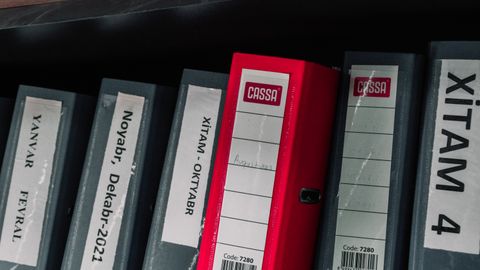
I have watched families search a house at two in the morning for a document they knew existed. I have watched a hospital proceed with treatment because nobody could produce the directive in time.
This is the least interesting part of planning and it is the part that most often determines whether any of it works.
The different documents need different handling
They have different urgency and different audiences.
Advance directives and proxy appointments may be needed within minutes, by clinicians who do not know you. Accessibility is everything.
The will is needed within days to weeks, by the executor. Security matters more than speed, and the original generally must be produced.
Financial and account information is needed over weeks to months.
Funeral wishes are needed within days, by whoever arranges it.
Storing all of these the same way means at least one of them is in the wrong place.
Advance directives: multiple copies, widely distributed
These should not be in a safe. They should be everywhere.
Give copies to your proxy, your alternate proxy, your GP or primary doctor, any specialist involved in your care, and the hospital if you have a condition that makes admission likely.
Ask specifically whether it can be recorded in your electronic medical record, which in many systems it can, and which makes it visible to anyone treating you.
Ask whether your country or region operates a registry for these documents.
Carry a card in your wallet noting that a directive exists, who holds it, and how to reach them. Some people put a note on the fridge, which sounds undignified and is what emergency services are trained to look for in several countries.
If you have a phone, most operating systems offer a medical information feature accessible from the lock screen. Use it.
The will: original, secure, findable
The original matters. In many jurisdictions a copy is insufficient, and a missing original can raise a presumption that it was deliberately revoked.
Options:
With the solicitor who drafted it, which is common and generally free. Make sure your executor knows which firm, and note that firms merge and close — check periodically that it is still where you think.
A national or regional will registry, which exists in some jurisdictions and allows the location to be recorded even if the document is held elsewhere.
A fireproof box at home, with the executor knowing where and how to open it.
Not, generally, a bank safe deposit box, unless you are confident it can be accessed. In some cases the authority needed to open the box is conferred by the very document inside it, which is a genuine and recurring problem.
Whatever you choose, write down the location and tell the executor. This single step prevents most of the difficulty.
The document that ties it together
The most useful thing you can create is a single page that is not itself confidential, saying where everything is.
Something like: the will is held by this firm, at this address, reference number this. The advance directive is with my GP and a copy is with my proxy. Financial information is in my password manager, and the master password is in a sealed envelope in this drawer. My solicitor is this person. My accountant is this person. My funeral wishes are in a note in the same drawer.
This page contains no credentials and no confidential detail, which means it can be left somewhere obvious and given to several people.
Put a date on it and update it annually.
Digital storage
Useful as a supplement and problematic as the only copy.
A file in cloud storage is inaccessible if nobody can get into the account. An encrypted file is inaccessible without the key.
Scanned copies stored digitally are worth having for reference and for reconstruction if originals are lost. They do not replace originals where originals are required.
Password managers with emergency access, covered elsewhere on this site, are the best available mechanism for the credential and account information.
The review habit
Documents drift out of date and out of location.
Once a year, or at any significant life event, check: is the will still current and still where I think it is? Are the beneficiary designations on my pension and insurance up to date? Is the advance directive still what I want, and does my doctor have it? Is my proxy still willing and still contactable? Is the one-page location document accurate?
Pick a date — a birthday, the start of a tax year — and do it then. It takes half an hour.
Telling people
The final and most-skipped step.
Your executor should know they are the executor and where the will is. Your proxy should know they are the proxy and what you want. Your family should know both of these things, so that nobody is surprised.
A quiet conversation now prevents a search at two in the morning later.
Requirements for the storage and production of wills differ by jurisdiction. Ask the solicitor or notary who prepares your documents what applies where you live.
Also by Margaret Oyelaran
- When you are the last one leftGrief & After
- Losing a partner after a long life togetherGrief & After
- Continuing bonds: what people do with the relationship afterwardsGrief & After
- The letter you leave behindFamily Conversations