Family Conversations
Caring for a parent while holding everything else together
Family carers provide the overwhelming majority of care, largely unpaid and largely unnoticed, and the practical support that exists is frequently unclaimed.
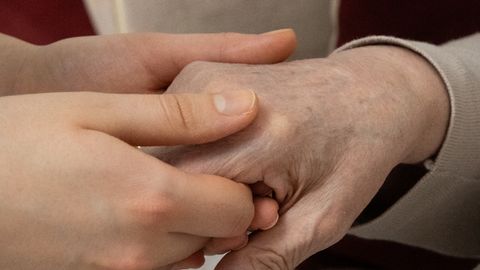
Most care of older and seriously ill people is provided by families rather than by services. It is largely invisible, largely unpaid, and it falls disproportionately on women and on one sibling rather than being shared.
The pattern that recurs
Care starts small — a bit of shopping, some help with forms — and increases gradually, so that nobody notices when it becomes substantial.
One family member becomes the carer, usually the one who lives nearest or who is perceived as having more time. Others contribute less and frequently do not realise how much is being done.
The carer reduces their working hours, then leaves work. Their income falls, their pension contributions stop, and their own health declines.
Resentment builds, between siblings and toward the person being cared for, which produces guilt.
This is the standard trajectory. Recognising it early is what changes it.
The practical steps that help most
Get an assessment. Many countries provide for an assessment of the cared-for person's needs and, separately, of the carer's own needs.
These are frequently unclaimed because people do not know they exist or assume they will not qualify. An assessment costs nothing and it is the gateway to most support.
Check entitlements. Carer's allowances or benefits, attendance and disability benefits for the person being cared for, council tax or local tax reductions, and support with equipment and adaptations.
Substantial sums go unclaimed every year. Benefits advice services exist in most countries and they are free.
Get the legal arrangements in place early. A power of attorney for finances and for health and welfare, made while the person has capacity.
This is the single most important administrative step. Once capacity is lost, the alternative is a court process that is slow, expensive and considerably more restrictive.
Families discover this at the worst possible moment, constantly.
Get the practical information written down while the person can provide it. Accounts, insurance, utilities, medical history, medications, and who to contact.
Sharing it among siblings
The most common source of family conflict, and it is worth addressing explicitly rather than hoping.
Have a specific conversation, preferably before the situation is acute, about who does what.
Recognise that contributions differ. Distance, work, health and family circumstances vary. Someone who cannot provide hands-on care may be able to contribute financially, handle administration remotely, or take over during holidays.
Be specific. "Help more" produces nothing. "Come the first weekend of every month" is actionable.
Name the imbalance. If one person is doing most of it, saying so, without accusation, is better than accumulating resentment silently.
Money. Where one sibling gives up income to provide care, whether and how that is recognised is worth discussing openly, including any implications for the estate. Unspoken assumptions here produce disputes later.
Carer burnout
Recognised, common and serious. Family carers have documented higher rates of depression, poorer physical health and increased mortality risk compared with non-carers.
Signs: exhaustion that rest does not touch, irritability, withdrawal from everything else, physical symptoms, feelings of resentment or hopelessness, and thoughts of not being able to continue.
What helps: respite care, which exists in many places and is under-used; practical help with specific tasks; carer support groups, where meeting others in the same position is frequently reported as the most useful intervention; and, straightforwardly, time away.
Taking a break is not abandonment. A carer who collapses helps nobody.
The conversations to have with the person being cared for
What they want, while they can still say. Where they want to be cared for, what they would find unacceptable, what matters to them.
Their permission to accept help. Many older people resist outside carers, and knowing that they are willing removes a source of guilt.
Their views on care home admission, discussed in advance rather than in crisis.
And, if you can manage it, an acknowledgement in both directions. Carers frequently never hear thanks, and cared-for people frequently never say it, and both regret it.
The care home decision
Frequently framed as a failure and it is not.
The circumstances that make it right: care needs exceeding what one person can safely provide, night-time needs that make sleep impossible, medical needs requiring skilled care, the carer's own health failing, and safety concerns.
People who make this decision frequently describe overwhelming guilt, and frequently describe the relationship improving afterwards, because they can be a daughter or a son again rather than a carer.
If a promise was made never to put someone in a home, it is worth saying that promises made in ignorance of what would be involved are not binding.
Looking after yourself
Keep something that is yours. One activity, one friendship, one evening.
Tell your own doctor you are a carer, which in some systems triggers additional support and which at minimum means someone knows.
Accept specific offers of help, and give people specific tasks when they ask.
And know that the exhaustion frequently arrives properly after it ends, which is not weakness.
Support for carers, assessments and financial entitlements differ by country. Contact a carers' organisation or your local authority to find out what is available where you live.
Also by Margaret Oyelaran
- When you are the last one leftGrief & After
- Losing a partner after a long life togetherGrief & After
- Continuing bonds: what people do with the relationship afterwardsGrief & After
- The letter you leave behindFamily Conversations