Grief & After
Anniversaries, birthdays and the first year
Certain dates arrive with more force than expected, and the anticipation is frequently worse than the day itself.
The first year after a death contains a series of dates that arrive whether you are ready or not: the birthday, the anniversary of the death, the wedding anniversary, the first Christmas or equivalent, the first holiday.
People consistently report two things about these. They are harder than ordinary days. And the anticipation is frequently worse than the day.
What tends to happen
The build-up. Dread accumulating over the preceding week or two, sometimes without conscious recognition of why.
People frequently describe a period of feeling inexplicably worse and then realising what date is approaching.
The day itself, which is often less overwhelming than feared, partly because it has been braced for.
The afterwards, which can be flat, and which is worth expecting.
Anniversary reactions in subsequent years, which continue for a long time and diminish gradually. Many people report a physical or emotional response around the date years later, sometimes before consciously registering it.
What helps
Plan something. The consistent finding from people who have been through it is that having a plan is better than letting the day arrive unstructured.
What kind of plan matters less than having one. Some people mark it deliberately; some deliberately do something distracting; some take the day off and do nothing in particular.
What is difficult is being at work, surrounded by people who do not know, with nothing arranged.
Decide whether to be with people or alone, and tell someone either way. Both are legitimate and the failure mode is intending to be alone and then finding it unbearable at four in the afternoon with nobody available.
Lower expectations of yourself. Take the day off if you can. Do not schedule anything demanding around it.
Tell people the date is coming. Others frequently do not realise, and a message on the day from someone who remembered is reported as one of the most valuable things.
If you are supporting someone bereaved: put the dates in your calendar. Message them. This is a small thing that people remember for years.
Rituals people find useful
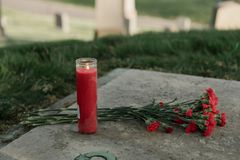
Visiting the grave or the place where ashes were scattered.
Cooking something they liked.
Looking at photographs, which is harder in the first year and frequently valuable later.
Doing something they enjoyed.
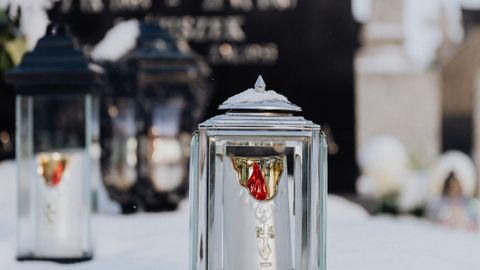
Lighting a candle.
Giving to a charity connected with them.
Writing to them.
Gathering with people who knew them and telling stories, which is frequently reported as the most helpful of all — bereaved people generally want to talk about the person and find that others have stopped mentioning them.
The first Christmas or major festival
Frequently the hardest, because it is prolonged, socially obligatory, family-centred, and impossible to avoid.
Approaches that people report as helpful:
Deciding in advance what you will do, rather than drifting into it.
Changing something. A different location, a different meal, a different structure. Replicating the previous arrangement with an absence in it is frequently harder than doing something new.
Acknowledging them explicitly — a toast, an empty place, a candle, saying their name. Families frequently avoid mentioning the person for fear of upsetting each other, and the avoidance is generally worse than the mention.
Permission to leave. Agreeing in advance that anyone can go home early without explanation.
Reducing the obligation. Fewer people, less cooking, lower expectations.
And it is entirely acceptable to opt out for a year.
The second year
Frequently harder than expected, and worth knowing in advance.
The support has receded. Other people have moved on. There is an unspoken expectation that a year is enough.
Meanwhile the reality has fully settled, the numbness has gone, and the permanence is clear in a way it was not initially.
People who expect the second year to be easier and find it is not frequently conclude something is wrong with them. Nothing is.
The dates nobody thinks about
Beyond the obvious ones: the date of the diagnosis, the date they went into hospital, the last time you spoke, the date of the funeral.
Also unpredictable triggers — a song, a smell, someone with a similar walk, the season changing.
These arrive without warning and are frequently more destabilising than the planned dates, precisely because there is no bracing.
There is no way to prepare for them and it helps to know they are normal and that they diminish.
How long this goes on
The honest answer is that anniversary reactions can continue indefinitely and generally become milder and shorter.
Many people describe a shift from dreading the date to wanting to mark it — from something to survive to something to observe.
That shift takes years for most people and it is not something that can be hurried.
What people describe eventually is a day that is different from other days, sad and manageable, and sometimes even welcome as a licensed occasion to think about someone they think about anyway.
If anniversaries produce severe distress that does not improve over years, or if grief remains disabling, support is available through bereavement services and your doctor.
Also by Margaret Oyelaran
- When you are the last one leftGrief & After
- Losing a partner after a long life togetherGrief & After
- Continuing bonds: what people do with the relationship afterwardsGrief & After
- The letter you leave behindFamily Conversations