Family Conversations
Talking to children about death
Children handle honest information far better than adults expect, and considerably worse than euphemism, which they interpret literally and find frightening.
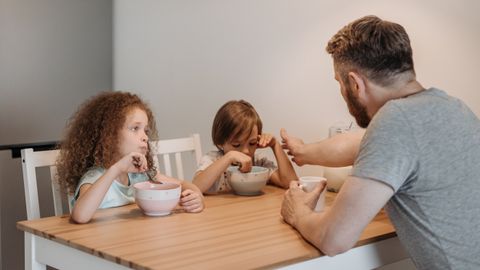
Adults protect children from information about death and generally make things harder by doing it.
Children know something is happening. They notice crying, whispered conversations, and the sudden absence of a person. What they do not have is an explanation, so they construct one, and the constructed version is usually worse and frequently involves it being their fault.
The euphemism problem
Children under about seven or eight are concrete thinkers, and they interpret language literally.
"We lost Grandma." Then find her. Why is nobody looking?
"She's gone to sleep." This is the worst one. It produces bedtime terror and fear of anaesthetics, and children who have been told this frequently develop sleep problems.
"He's gone away." Why did he leave without saying goodbye? When is he coming back? Will Mum go away too?
"God took her because she was so special." Frightening, and it makes being special dangerous.
"He passed." Passed what?
The recommendation from essentially every organisation working in childhood bereavement is the same: use the words dead and died.
They are clear, they are unambiguous, and children handle them.
What to explain
Children need four things, and repeating them is normal and necessary.
That death is permanent. Young children frequently believe it is reversible. They will ask when the person is coming back, repeatedly. This is not them failing to listen; it is them working it out.
That the body has stopped working. A concrete explanation is more useful than an abstract one. "Her body stopped working. It can't be fixed. She can't feel anything, she isn't cold or hungry or frightened."
Why it happened. Ideally with a cause specific enough to be non-generalisable. "He was very old and his heart stopped working" is better than "he was ill", which makes every illness terrifying.
If a child has a cold and someone died of an illness, say explicitly that they are different.
That it is not their fault. Children frequently believe it is, because of something they said, thought or wished. Say directly that nothing they did or thought caused it, even if they have not raised it.
What children ask
Blunt questions, at inconvenient moments, repeatedly.
Will you die? The honest answer is yes, everybody dies, and probably not for a very long time, and there are people who will always look after you. Reassurance about continuity of care is what they are actually asking for.
What happens to the body? Answer factually, at whatever level of detail they ask for. Children are frequently interested in the practical mechanics and are less disturbed by it than adults.
Where are they now? Answer according to your own beliefs, and be careful about certainty you do not have. If your family holds religious beliefs, express them as beliefs.
Questions frequently arrive weeks later, in the car, while you are thinking about something else. That is normal.
Funerals
The general guidance from bereavement organisations is that children should be given the choice, with adequate preparation.
Explain in detail what will happen: what the room looks like, that there will be a coffin, what is in it, that people will cry, how long it will last, what happens afterwards.
Give them a role if they want one — choosing a flower, drawing a picture to put in, lighting a candle.
Arrange for a trusted adult who is not the chief mourner to be responsible for them, so they can leave if they want to.
And accept a no. Children who are excluded frequently regret it later; children who are forced also do.
How children grieve differently
In bursts. Distraught for ten minutes, then playing. This is not shallowness — children cannot sustain intense emotion for long and dose it in fragments.
Adults frequently misread this as the child being unaffected.
Through behaviour rather than words. Regression, clinginess, sleep problems, anger, difficulty at school, physical complaints.
Repeatedly, at each developmental stage. A child who loses a parent at four will grieve again at ten, and again at sixteen, as they understand more of what was lost. This is normal.
In play. Acting out funerals, burying toys. This is processing, not morbidity.
What helps
Maintaining routine, which provides security when everything else has changed.
Telling the school, so that behaviour is understood and support is available.
Allowing them to see adults grieve. A parent who never cries teaches that grief must be hidden. A parent who is entirely overwhelmed is frightening. Somewhere in between, with an explanation — "I'm crying because I miss him, and I'm going to be all right" — is what works.
Keeping the person present in conversation. Talking about them, using their name, telling stories.
Something physical to hold — a photograph, an object, a memory box.
When to get help
Persistent difficulties beyond several months, significant deterioration at school, withdrawal from everything they enjoyed, expressions of wanting to die, or a child who cannot be comforted at all.
Childhood bereavement services exist in most countries, frequently free, and they are staffed by people who do this constantly.
Asking for help is not an admission that you have handled it badly. Most parents doing this are also grieving the same person.
Childhood bereavement services are available in most countries, often free. Ask your GP, your child's school, or search for a national childhood bereavement charity.
Also by Margaret Oyelaran
- When you are the last one leftGrief & After
- Losing a partner after a long life togetherGrief & After
- Continuing bonds: what people do with the relationship afterwardsGrief & After
- The letter you leave behindFamily Conversations